Insider tips for Kennington sofa removals on narrow stairs
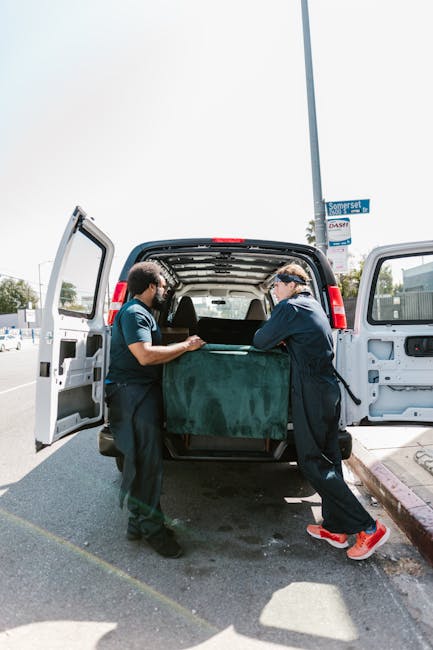
If you have ever tried to angle a sofa through a tight Kennington staircase, you will know the problem straight away: the walls feel closer than they looked at the viewing, the bend is sharper than expected, and suddenly a perfectly normal sofa seems to have developed a personal grudge against the hallway. These insider tips for Kennington sofa removals on narrow stairs are here to help you avoid the usual stress, protect your furniture, and keep the move moving.
In this guide, we will walk through what makes narrow-stair sofa removals tricky, how professionals approach them, and the practical steps that make a real difference on the day. You will also find a checklist, a comparison of removal methods, and a realistic example from a typical Kennington property. Truth be told, a little planning goes a long way here.
- Why this kind of move matters
- How the process works
- Key benefits and practical advantages
- Who this advice is for
- Step-by-step guidance
- Expert tips for better results
- Common mistakes to avoid
- Tools, resources and recommendations
- Law, compliance, standards and best practice
- Options and comparison
- Real-world example
- Practical checklist
- Conclusion
- Frequently asked questions
Why Insider tips for Kennington sofa removals on narrow stairs Matters
Kennington has plenty of homes where stairs are beautiful but not especially forgiving. Period conversions, basement flats, compact maisonettes, and older terraced properties often come with staircases that turn, narrow, or pinch at the landing. That is exactly where sofa removals get awkward.
Why does it matter so much? Because the wrong approach can lead to scuffed paintwork, strained backs, damaged upholstery, and a lot of unnecessary frustration. And let's face it, nobody wants to spend the first evening in a new place staring at a sofa wedged halfway down the stairs.
The issue is not just size. It is the combination of sofa shape, stair width, ceiling height, banister position, and the turning circle available at each landing. A sofa that looks manageable in the living room may behave very differently once it meets a tight corner. That is why experienced movers treat narrow-stair removals as a planning job first and a lifting job second.
There is also a local angle. In busy parts of London, timing matters. Street access, parking, and neighbour access can all make a simple carry more complicated. If you want to understand the wider moving process around the area, it can help to look at home moves in Kennington and how those jobs are usually organised around access, timing, and building layout.
How Insider tips for Kennington sofa removals on narrow stairs Works
The basic idea is simple: measure carefully, prepare the route, protect the property, and move the sofa using a method that suits the staircase rather than forcing the staircase to suit the sofa. That sounds obvious, but in practice people often skip the measurement stage and hope for the best. Usually a bad plan.
A professional sofa removal on narrow stairs normally follows this pattern:
- Assess the sofa - check length, depth, height, arm width, and whether legs or cushions can be removed.
- Measure the route - measure stair width, landing depth, any turns, and the narrowest point.
- Prepare the property - clear floors, doors, and hallway obstacles, then protect corners and bannisters.
- Choose the movement angle - the sofa may need to go upright, tilted, or rotated through the bend.
- Use the right equipment - straps, sliders, blankets, and sometimes extra hands for coordination.
- Lift with control - not brute force, but slow, communicated, and planned movement.
- Finish safely - avoid rushed twists at the final corner, where most accidents happen.
One thing to remember: the best route is not always the most obvious one. A sofa might look impossible via the main stairs but surprisingly manageable if the angle is changed or the legs are removed. On other jobs, the honest answer is that it will not fit without dismantling or a different access plan. Clear judgement beats optimism every time.
If the move is part of a larger household removal, the broader service options can matter too. Many people find it useful to compare with removal services and see whether packing help, storage, or a van-and-lift approach suits the job better.
Key Benefits and Practical Advantages
Done properly, a narrow-stair sofa removal gives you more than just a sofa in the new room. It gives you a calmer move, less risk, and better control over the whole day.
- Less damage risk - both to the sofa and the property.
- Faster loading and unloading - once the route is planned, the move tends to flow better.
- Lower physical strain - lifting awkward furniture is where injuries happen if people rush.
- Better decision-making - you can decide early if the sofa needs partial dismantling or specialist handling.
- Less stress on moving day - no guessing, no last-minute panic, no "we'll just try it" energy.
There is a subtle but important advantage too: a good plan protects everyone involved, including neighbours and building common areas. In a shared stairwell, that matters. You are not just moving a sofa; you are moving it through a live environment where someone may need to pass, a baby may be asleep downstairs, or a delivery rider might appear at the worst possible moment. That is just London, really.
For people comparing service levels, it may also help to review man and van options against more full-service moving support. A smaller sofa move on narrow stairs may only need a compact team and the right equipment, not a huge lorry or a big production.
Who This Is For and When It Makes Sense
This advice is especially useful if you are moving in or out of a flat with narrow internal stairs, a maisonette, a converted house, or a basement property in Kennington. It also applies if you are replacing a sofa, moving furniture between rooms in the same building, or dealing with a second-hand sofa that has to be collected and carried down awkward access.
You will probably find these tips most useful if any of the following sound familiar:
- Your staircase has a tight turn or awkward landing.
- The sofa has fixed arms or a rigid frame.
- The building is older and the bannister leaves little room to manoeuvre.
- You are moving without much daylight time, so speed matters.
- You want to avoid damaging freshly painted walls or new flooring.
These tips are also a sensible read if you are weighing up whether to DIY the move or call in help. A two-person carry may be fine for a lightweight two-seater. A bulky corner sofa, not so much. Be honest with yourself here. The sofa does not care how determined you feel at 8am.
If you are in the middle of a wider property move, the guidance in house moves can also help you think about the job in a more structured way, especially where timing and access have to be coordinated around a whole home rather than one item.
Step-by-Step Guidance
Here is the practical method we would use on a real narrow-stair sofa job in Kennington. Nothing fancy. Just careful, repeatable steps.
1. Measure the sofa properly
Measure the sofa length, depth, height, and the widest points, including arms and protruding feet. Do not forget loose cushions if they cannot be removed. If the sofa has detachable legs, check whether taking them off gives you enough extra clearance to make the turn easier.
2. Measure the staircase and landing
Measure the narrowest stair width, the height from tread to ceiling, and the landing depth at the turn. A tape measure is useful, but so is common sense. If the staircase narrows at handrail height, that can matter just as much as floor width.
3. Clear the route completely
Move shoes, mats, plant pots, side tables, and anything else that can catch a foot or slow the carry. In a small hallway, even a single umbrella stand can become an annoying obstacle. Clear the route from the front door to the final room before anyone starts lifting.
4. Protect walls and corners
Use blankets, corner protectors, or cardboard on tight edges. Some people skip this because they are in a hurry. That is where the little chips and scuffs appear. One awkward bump and you will be touching up paint later, which nobody really enjoys.
5. Decide the best carrying position
Often a sofa will need to be carried vertically or at a steep angle to clear the turn. This depends on the shape of the sofa and the stairwell. A slightly longer sofa can sometimes pass more easily if it is tipped in the right direction. The angle is everything.
6. Communicate clearly during the move
Use simple commands like "pause," "lift," "turn," and "down." Too much chatter gets in the way. One person should usually call the movement if more than two people are involved. It keeps the rhythm steady and avoids that awkward moment where everyone moves at once in different directions. We have all seen it. Not ideal.
7. Take the turn slowly
The turn is where most sofa removals become difficult. Move a few inches at a time, check the clearance, and do not force the frame through a gap that is clearly too tight. If needed, stop, reset, and change the angle. That small pause can save the sofa and the wall.
8. Finish with a controlled set-down
The final few steps are often rushed because everyone is relieved. Resist that urge. The landing, doorway, or final room entrance may still be narrow. Set the sofa down deliberately, breathe, and then adjust the position. Bit of calm at the end saves a lot of noise.
Expert Tips for Better Results
The difference between a stressful sofa removal and a smooth one is usually not strength. It is judgement. Here are the details that experienced movers pay attention to.
- Remove the feet first if possible. Sometimes a small reduction in height makes a big difference at the turn.
- Strip loose items off the sofa. Cushions, throws, and blankets add bulk and reduce grip.
- Check for weak points in the frame. Older sofas can flex in awkward ways, especially under pressure at the arms.
- Use furniture blankets rather than bare hands on the edges. It improves grip and protects finishes.
- Do a dry run with the sofa tilted before committing. A quick test can show whether the angle is realistic.
- Watch the bannister and light fittings. These are often the first things people forget to account for.
- Move in better light if you can. Early evening shadows on a staircase can make depth perception trickier than expected.
One small but useful trick: if a sofa seems impossible, step back and assess the route from the top of the stairs and then from the bottom. The access problem often looks different from each direction. That tiny change in viewpoint can reveal the best angle. Strange, but true.
For sofa-heavy jobs or mixed furniture removals, it may also help to think about pickup logistics in the same way professionals do for furniture pick-up, where handling, access, and timing all need to line up cleanly.
Common Mistakes to Avoid
A lot of sofa removal problems are predictable. The good news is that once you know the common mistakes, you can avoid most of them without much drama.
- Guessing the measurements. "It should fit" is not a measurement.
- Forgetting the turn radius. A stair can be wide enough but still fail at the landing.
- Not removing detachable parts. Feet, cushions, and loose arms can make all the difference.
- Using too many people without a clear lead. More hands do not always mean better control.
- Dragging instead of carrying. That may scratch floors and put strain on the frame.
- Rushing the final corner. Most scuffs happen in the last few seconds.
- Ignoring building access rules. In flats and managed buildings, quiet hours or common-area rules may apply.
There is also a practical mistake people make when they are tired: they focus on the sofa and forget the route. In reality, the route is the job. If the staircase is awkward, the route needs more attention than the furniture itself. That shift in thinking helps a lot.
Tools, Resources and Recommendations
You do not need a van full of specialist kit for every sofa move, but the right tools make a narrow-stair job safer and less frustrating. These are the items that usually earn their keep.
| Tool or item | What it helps with | When it is most useful |
|---|---|---|
| Furniture blankets | Protecting walls, floors, and sofa edges | Tight stairwells and narrow door frames |
| Moving straps | Improving grip and load control | Heavy or awkward sofas |
| Flat sliders | Reducing floor friction | Short repositioning before the carry |
| Tape measure | Checking sofa and stair dimensions | Before any lifting starts |
| Protective corner guards | Shielding walls and corners | Older properties or freshly decorated homes |
| Work gloves | Improving grip and protecting hands | Almost every manual move |
If you are comparing service quality, it can help to review a company's approach to safety and care. A page like insurance and safety gives a useful sense of how seriously a mover treats risk, which matters a great deal when stairs are tight and the margin for error is small.
For bigger jobs or more involved furniture moves, you might also look at man with van removal if you want a flexible setup that can handle single items alongside other household pieces. Sometimes a smaller, more nimble approach is exactly what narrow access calls for.
Law, Compliance, Standards and Best Practice
For a sofa removal, there is usually no special legal drama on the customer side, but there are still sensible standards to follow. In the UK, movers should work with proper care for people, property, and traffic around the building. That means safe lifting, clear communication, and sensible route planning. It also means respecting access arrangements, building rules, and neighbours.
If the move involves parking on a public road, loading bays, or restricted access, local rules may apply. In some parts of London, parking and loading can be the part that causes the most delay, not the stairs themselves. If that sounds familiar, it may be worth reading about Kennington Road furniture removals and parking permits, because access planning often starts outside the front door.
Best practice also means using insured, trained help where appropriate and being honest about limits. If a sofa clearly will not fit safely, the right answer is to stop and reassess, not to force it. That is not lack of effort; it is good judgement. And to be fair, good judgement saves money.
Options, Methods, or Comparison Table
There is more than one way to handle a sofa on a narrow staircase. The right choice depends on sofa size, the shape of the stairwell, and how much help you have.
| Method | Best for | Pros | Cons |
|---|---|---|---|
| DIY with two people | Smaller sofas and simple stairs | Lower cost, flexible timing | Higher risk if the route is tight or awkward |
| Professional removal team | Bulky or valuable sofas, tricky access | Better control, safer handling, less stress | Usually costs more than doing it yourself |
| Partial dismantling | Sofas with removable feet or sections | Improves fit and clearance | Needs time, tools, and care to reassemble |
| Alternative access route | Properties with side or rear entry | Can avoid the tightest staircase entirely | May not be available in every building |
For some moves, especially where timing is tight, service availability matters as much as technique. If you are in a hurry, it can help to look at avoiding delays in Kennington last-minute removals so you can plan around time pressure instead of fighting it on the day.
Case Study or Real-World Example
Here is a realistic example. A couple moving out of a first-floor Kennington flat had a three-seater sofa with fixed arms and a narrow, turning staircase. The hallway looked fine at first glance, but once the sofa reached the landing, the outer arm caught the angle of the wall. Classic case. Not dramatic, just awkward.
Instead of forcing it, the movers stopped, removed the feet, protected the wall corner with blankets, and re-angled the sofa so it stood more upright. That changed the clearance just enough for the turn to work. It still took patience, and nobody was pretending otherwise, but the move stayed clean and the sofa came through without a scratch.
What made the difference was not strength. It was preparation, calm communication, and the willingness to reset instead of pushing through a bad angle. That is the real lesson with narrow stairs. A slower move often ends up being the faster one.
In a different job, where the building access was more complicated than the staircase itself, the team also had to think about insurance, team size, and handling standards. That is why some people like to read up on Kennington removals insurance and licensed team explained before booking. It gives helpful context when comparing providers.
Practical Checklist
Use this checklist before moving day. It is simple, but it covers the details that people most often forget.
- Measure the sofa, including arms and feet.
- Measure the narrowest part of the staircase.
- Check the landing size and turning space.
- Remove loose cushions and detachable parts.
- Clear the hallway, stairs, and doorway route.
- Protect walls, corners, floors, and bannisters.
- Agree who will call the moves and turns.
- Wear sturdy shoes and gloves.
- Check parking or loading arrangements if needed.
- Decide in advance whether the sofa can be moved safely or needs a different plan.
If you can tick all ten items, you are in a much better position. If not, no panic. Just fix the missing pieces before anyone starts carrying anything heavy up or down the stairs. Simple, but effective.
Get a free quote today and see how much you can save.
Conclusion
Kennington sofa removals on narrow stairs are rarely about brute force. They are about planning, patience, and using the right approach for the property in front of you. Measure properly, protect the route, choose the right angle, and do not rush the awkward corner just because everyone wants the job finished.
The good news is that most sofa moves can be handled smoothly when the staircase is assessed properly and the team knows what to expect. A little preparation turns a potentially stressful carry into a manageable, tidy piece of work. And that is what most people want, really: no drama, no dents, no lingering frustration.
If you are still unsure whether your sofa will fit, take one last careful look at the measurements and the landing space. Then make the sensible call. A smooth move is always better than a forced one. Always.
Frequently Asked Questions
How do you measure a sofa for narrow stairs?
Measure the full length, depth, height, and widest points of the sofa, including arms and feet. Then measure the staircase width, landing depth, and the narrowest turning point. If the sofa has removable parts, check whether taking them off helps enough to make the move safer.
Can a sofa be moved up or down a very narrow staircase without dismantling it?
Sometimes, yes. It depends on the sofa shape and the exact stair geometry. A sofa that looks too large in a normal position may fit when tilted or turned vertically. But if the landing is too tight or the stairwell bends sharply, partial dismantling or a different access plan may be needed.
What is the safest way to move a sofa on stairs?
The safest method is to measure first, clear the route, protect the walls, and move slowly with clear communication. If the sofa is heavy or the staircase is especially tight, using trained movers is usually the better choice. Safety comes before speed, even if the stairs are trying to prove a point.
Should I remove the sofa legs before moving it?
If the legs are detachable, removing them often helps by reducing height and improving clearance at turns. It can make the sofa easier to angle through a tight staircase. Just keep the fixings safe and label them so reassembly is straightforward later.
How many people are needed for a sofa removal on narrow stairs?
For a small or medium sofa, two capable people may be enough if the access is straightforward. For larger sofas, awkward turns, or older properties, a third person can help guide and spot clearance issues. More people only help if they are coordinated, though.
What should I do if the sofa gets stuck halfway on the stairs?
Stop moving immediately and reassess the angle. Do not force it. Back up a little if safe, adjust the tilt, and try again with a clearer plan. If the sofa is genuinely jammed, it may need a partial dismantle or professional help rather than more muscle.
Do I need protection for walls and bannisters?
Yes, especially in narrow staircases where contact is likely. Blankets, corner guards, and floor protection can prevent scuffs and chips. In a rented property or a freshly decorated home, that protection is well worth the small extra effort.
How long does a sofa removal on narrow stairs usually take?
It depends on access, sofa size, and how much preparation has been done. A straightforward move may be quick, while a tight staircase with a tricky corner can take much longer. The biggest time saver is usually preparation before the lifting starts.
Can I move a sofa by myself on narrow stairs?
In most cases, no. A sofa is awkward, heavy, and difficult to control on stairs, especially on turns. Even if it feels manageable for the first few steps, the risk increases fast at the landing. It is much safer to have at least one other person helping.
What if my sofa is too big for the staircase?
If measurements show the sofa will not fit safely, you may need to remove parts, use a different access route, or arrange a more suitable removal method. Sometimes the best decision is to stop before damage happens. That is not a failure; it is just sensible planning.
Are there parking or access issues in Kennington I should think about?
Yes, parking and loading can affect timing, especially in busier streets and shared residential buildings. It is wise to plan for loading access, any restrictions, and the time needed to carry the sofa from the property to the vehicle. A smooth move often begins outside the front door.
What kind of removal service is best for a sofa on narrow stairs?
A service with experience in furniture handling, careful access assessment, and the right equipment is usually the best fit. If the sofa is part of a larger move, a more complete removal service may be useful. If it is a single item, a flexible man-and-van style option may be enough.
How do I know if I should hire professionals?
If the sofa is large, valuable, difficult to dismantle, or likely to scrape walls on the way out, hiring professionals is often the safer choice. If you are unsure after measuring, that is usually a sign the job deserves expert handling. Better to ask early than wish you had later.